Few things are more disheartening for a homeowner than watching freshly applied paint begin to peel, bubble, or flake within months of a paint job. It looks like a product failure , and it often gets blamed on cheap paint. But in the majority of cases, premature paint failure is not about the quality of the paint at all. It is about the quality of the bond between the paint film and the surface beneath it. Understanding paint adhesion India’s climatic and construction conditions demand is the most important technical knowledge you can have before any painting project.
What Is Paint Adhesion?
Paint adhesion refers to the ability of a paint film to stick to , and remain stuck to , the surface it is applied to. A well-adhering paint film forms a strong, continuous bond with the substrate that resists mechanical stress (knocks and scrubbing), thermal stress (expansion and contraction with temperature changes), and moisture stress (water ingress and humidity cycling). Poor paint adhesion results in the familiar failures: blistering, peeling, flaking, and cracking , the paint bonding guide India’s homeowners need to understand before they pick up a brush.
Why Paint Peels Off Walls: The Root Causes
Why paint peels off walls is a question with several possible answers, and identifying the correct cause is essential to choosing the right solution:
- Dirty or greasy surfaces: Paint cannot bond to surfaces contaminated with grease, dust, mould, efflorescence (salt deposits), or old chalky paint. The paint film adheres to the contaminant rather than the substrate , and when the contaminant releases, the paint comes with it.
- Damp or wet surfaces: Moisture is the single most common cause of paint adhesion problems India experiences. Water in the substrate creates vapour pressure that pushes the paint film away from the surface. Painting over damp plaster or masonry almost always results in premature failure.
- Incompatible products: Applying a water-based topcoat over an oil-based undercoat, or vice versa, without appropriate priming creates chemical incompatibility that causes delamination.
- Insufficient surface preparation: Shiny, smooth surfaces , old gloss paint, tiles, polished concrete , do not provide enough mechanical key for new paint to grip. Without sanding or a bonding primer, new paint will fail.
- Inadequate primer or no primer: Primer is specifically designed to bridge the gap between the substrate and the paint film. Skipping primer is one of the most reliable ways to guarantee paint peeling prevention India fails.
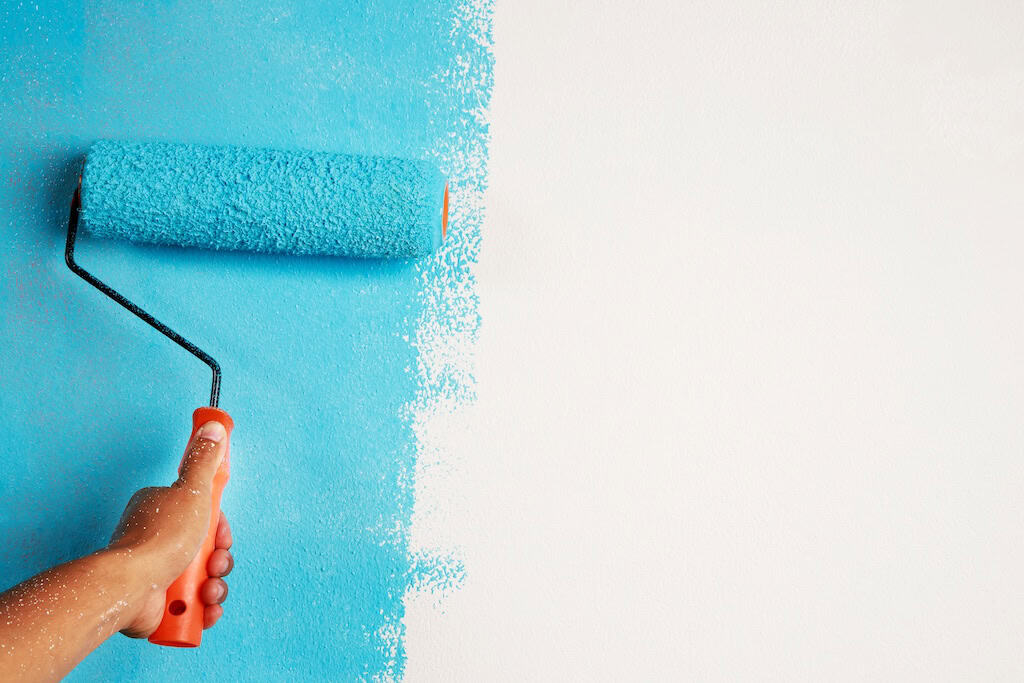
How to Improve Paint Adhesion: A Step-by-Step Approach
Step 1: Surface Preparation India
Paint surface preparation India is the most critical determinant of adhesion quality. Before any paint is applied:
- Clean the surface thoroughly , remove all dust, grease, mould, and loose material
- Sand glossy or smooth surfaces to create mechanical key
- Fill all cracks and holes with an appropriate filler and allow to dry fully
- Remove all efflorescence with a stiff brush and treat with a salt inhibitor if present
- Ensure the surface is completely dry , test with a moisture meter if in doubt
Step 2: Primer for Better Paint Bonding
Primer for better paint bonding is not optional , it is foundational. Different surfaces require different primer formulations:
- New plaster: Alkali-resistant primer to neutralise high pH and seal porosity
- Bare masonry or concrete: Masonry primer for penetration and sealing
- Previously painted surfaces in poor condition: Bonding primer to create adhesion over compromised substrates
- Metal surfaces: Rust-inhibiting metal primer to prevent corrosion and improve adhesion
- Highly porous or chalky surfaces: PVA sealer to consolidate the surface before priming
Step 3: Compatible Paint Systems
Wall paint not sticking solution often involves re-evaluating the compatibility of the entire paint system. Always use products from within the same range or system , primer, undercoat, and topcoat designed to work together. When in doubt, consult the manufacturer’s technical data sheet or speak to a specialist supplier. At Narandas & Sons, our team can help you assemble a fully compatible, performance-optimised paint system for any substrate.
Wall Paint Durability Tips for Long-Term Performance
Beyond surface preparation, these wall paint durability tips will help ensure your paint system delivers maximum longevity:
- Always apply two full topcoats , single-coat application reduces film thickness and adhesion strength
- Do not paint in extreme heat or direct sunlight , paint that dries too quickly does not form a strong film
- Allow adequate drying time between coats , insufficient drying leads to inter-coat adhesion failures
- In humid conditions, allow additional drying time , India’s monsoon season is particularly demanding for paint application and curing
Understanding paint adhesion India’s conditions demand is what separates a paint job that lasts five years from one that lasts fifteen. At Narandas & Sons, we stock the primers, bonding products, and topcoats you need for a paint system that genuinely performs. Ask our team about the right paint bonding guide for your specific surface and conditions.